

Who Books a Tuesday?
Who Books a Tuesday? Filling Midweek Nights in Ski Country and on the Coast
Look at almost any vacation rental calendar in Killington in January and you’ll see the same pattern: Friday and Saturday booked, Sunday through Thursday open. The weekends sell themselves. The middle of the week is where a home’s revenue is decided, because those are the nights the owner either learns to sell or writes off.
The mistake is treating a Tuesday guest as a discounted weekend guest. They aren’t. Midweek is a different customer with a different schedule, different needs, and a different reason for being there. Sell to that person and the nights fill. Discount the weekend rate by 20% and hope, and they mostly don’t.
The Quick Answer
Midweek nights are booked by people whose week isn’t built around a Saturday: skiers on midweek passes, remote workers who ski or beach before and after calls, retirees and empty-nesters who avoid weekend crowds, foliage travelers, and people on temporary work assignments who need a month. Each books differently and needs different things from the house. AirDNA’s analysis of the 50 largest U.S. markets found the most common empty stretch on a rental calendar is a single open Sunday night, followed by Sunday-through-Thursday gaps, and that larger homes are left with more empty midweeks than small ones. The fix is pricing and minimum stays that vary by night, a house set up for someone working from it, and a manager who markets to the midweek guest rather than waiting for one.
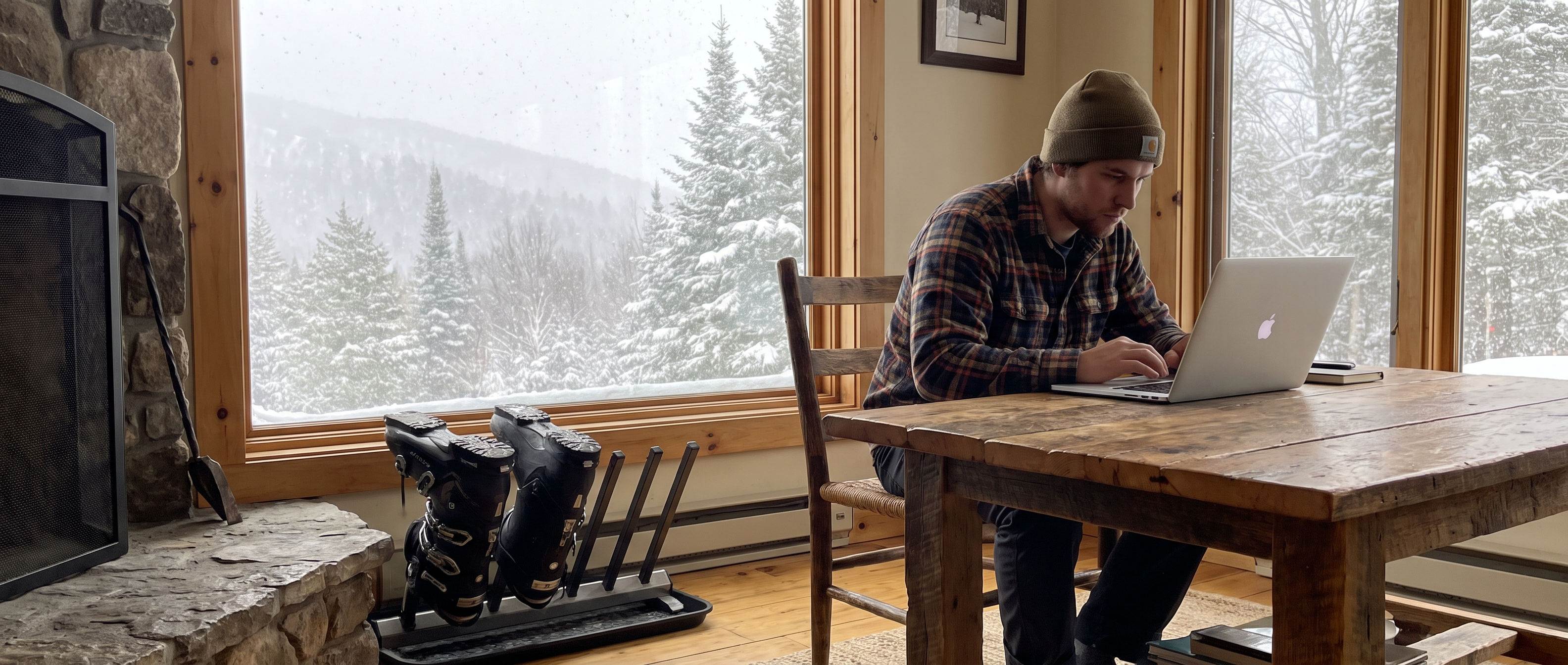
The midweek guest skis at nine and takes the call at eleven.
Why weekends fill themselves
In both of GetAway’s markets, weekend demand is deep and nearly automatic. A Boston or Hartford family can leave Friday after work and be at Killington for dinner, or in York for a late check-in. Half of all Friday check-ins across the country are two-night stays, according to AirDNA’s reservation data, and Saturday is the one day when a one-night stay is the most common booking. Weekend guests want the same thing in the same window, which is why those nights book early and at the best rates.
Midweek demand is shallower and more varied. It exists, but it has to be found, and it won’t accept weekend terms. AirDNA’s gap-night study found that none of the ten most common calendar gaps start on a Friday or Saturday; the empty nights cluster from Sunday on. Bigger homes (four and five bedrooms) have it worst, because a 10-person house is a weekend product by default.
The four midweek guests
Midweek pass holder
When they travel: Sunday to Thursday nights in ski season, often a two- or three-night pattern, repeated.
What they need in the house: Boot dryer, ski storage, early coffee, fast checkout.
How they find you: Marketplaces and past-guest email; they book again if it works.
How to price them: A midweek rate below the weekend rate but not a fire sale; shorter minimums Sunday to Wednesday.
Remote worker
When they travel: Sunday or Monday arrival, four to seven nights, in both ski season and summer.
What they need in the house: Reliable Wi-Fi, a real desk and chair, a second screen, good light, quiet, a door that closes.
How they find you: Search terms like "work from" and "monthly"; listing filters for workspace and Wi-Fi.
How to price them: Length-of-stay pricing (a lower nightly rate for five or more nights) with the weekend still priced as a weekend.
Retiree or empty-nester
When they travel: Any midweek stretch, especially foliage, early ski season, June, and September on the coast.
What they need in the house: Single-level living or a first-floor bedroom, a comfortable kitchen, good lighting, a walkable spot.
How they find you: Direct and past-guest email; they’re repeat guests by nature.
How to price them: Shoulder-season midweek rates; a three-night minimum works, a seven-night minimum doesn’t.
Temporary work assignment or extended stay
When they travel: 28 to 90 nights, typically winter in Killington or off-season on the coast.
What they need in the house: A fully equipped kitchen, laundry, workspace, parking, a monthly cleaning.
How they find you: Monthly-stay filters on the marketplaces and manager outreach.
How to price them: A monthly rate that covers the owner’s costs with a margin, offered in the months weekend demand is thin.
Pricing midweek without devaluing weekends
The principle: one rate across all seven nights leaves money on the table in both directions. It overprices Tuesday and underprices Saturday. A revenue manager sets rates by night, and day of week is one of the inputs GetAway’s revenue managers weigh alongside seasonality, booking pace, local demand, events, lead time, availability, and length of stay.
Three rules that follow from it:
Midweek rates stand on their own. They’re set against midweek demand, not as a percentage off the weekend. In a strong ski week that may be close to the weekend rate; in a quiet March week it won’t be.
Minimum stays vary by night. A three-night minimum on a Friday keeps a holiday weekend whole. The same minimum on a Monday blocks every Tuesday-and-Wednesday guest. Shorter minimums Sunday through Wednesday open the nights that sit empty most.
Length-of-stay pricing rewards the week. A guest who takes Sunday to Friday has filled five nights that usually don’t sell together. A lower nightly rate for that stay costs little and earns a lot.
The job is to get all three right for your home and market, then adjust as pace tells you. Our post on dynamic pricing covers how the pricing engine does this night by night.
The Midweek Pass is a demand signal
Killington sells a Midweek Pass alongside its unlimited season pass, which tells you something a national benchmark can’t: there is a defined population of skiers whose season is built around Sunday-to-Thursday skiing. Some live within a couple of hours and day-trip. Many don’t, and they’re looking for a place to sleep that fits a two- or three-night midweek pattern. A listing that says "ski storage, boot dryer, five minutes to the Access Road, two-night minimum midweek" is talking to them directly.
The same logic applies to the coast in June and September, when the weekly Saturday-to-Saturday rhythm of July and August loosens and midweek travelers (retirees, couples, dog owners who want the off-season beach hours) make up a larger share of demand.
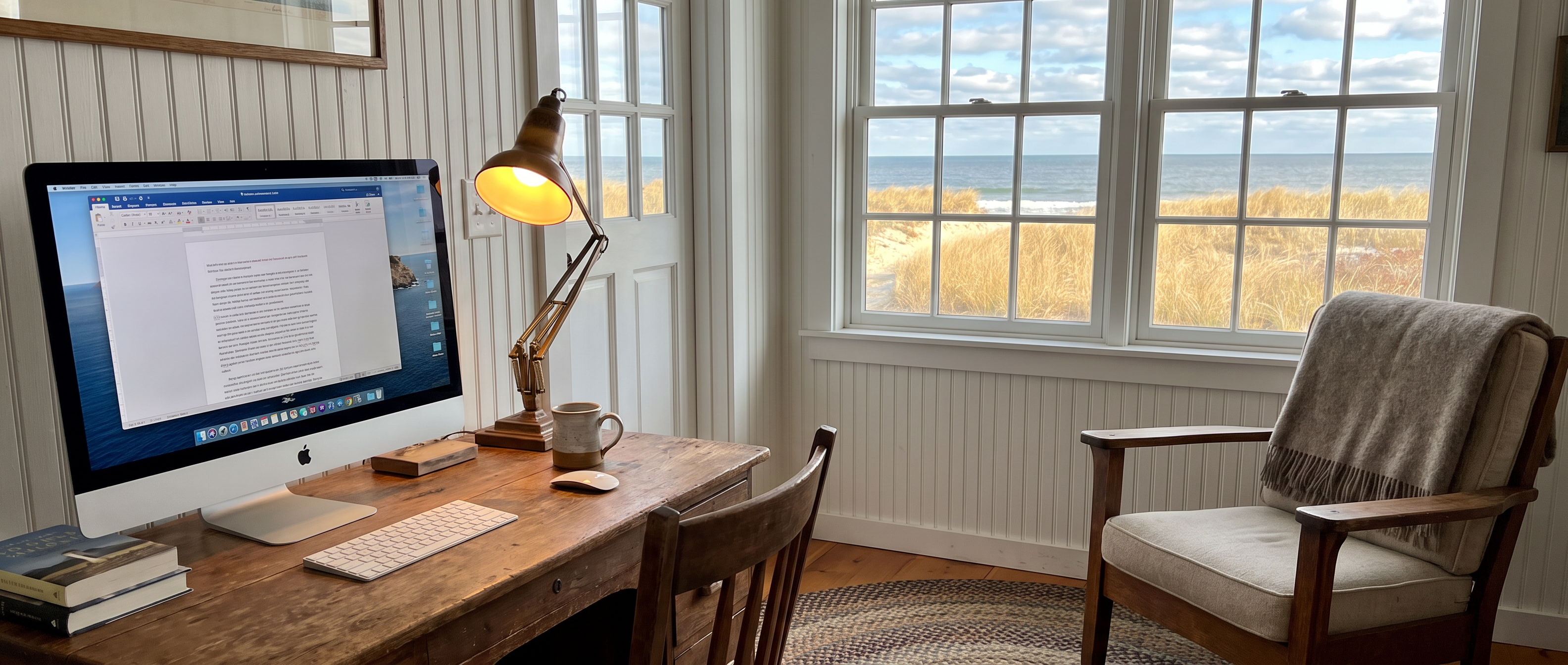
A real desk is the cheapest midweek amenity you can add.
Making the house work for someone working from it
Remote workers are the most reachable midweek guest and the easiest to lose with a bad setup. Before the listing claims "great for remote work," the home should have:
Internet you’ve measured. Run a speed test at the desk and put the number in the listing. Guests filter for Wi-Fi and will ask.
A real desk and chair, not a kitchen stool. A door that closes between the desk and the family.
A monitor and a lamp. A second screen is a small cost and a frequent request.
Outlets and a surge strip where the desk is.
Quiet hours and a note about them in the house guide, so the guest on the 11 a.m. call isn’t competing with the plow truck.
Good coffee and a decent kitchen. A midweek guest eats in more than a weekend guest does.
Our guest-facing guide to working remotely from Killington shows what those guests are reading before they book.
The 30-night stay: pros, cons, and rules
An extended stay is a product of its own, and in the slowest months it can be the difference between a home that covers its winter heat and one that doesn’t.
Why it works. Stays of 28 nights or more made up about 18% of Airbnb’s gross nights booked in 2024, according to the company’s filings, and its executives have said long-term stays remain roughly double their pre-pandemic size. One guest, one turnover, thirty nights of occupancy in a month that might otherwise sell ten.
Why it isn’t free money. The nightly rate is lower. Wear is spread across a month rather than a weekend, but it is still a month of use. And stays beyond a month can fall under different tax and tenancy rules in both Vermont and Maine, so the stay should be structured deliberately, with the right agreement and the right cleaning schedule, not accepted as a long weekend that kept going.
When to offer it. Late March through May in Killington, and November through March on the coast, are the windows where a monthly guest rarely displaces a higher-paying short stay. In peak season the math usually favors short stays, even with the extra turnovers. The Killington mud season post covers the shoulder-season demand sources in more detail.
What the owner sees
Every midweek booking, however it was priced, lands on the same calendar and monthly statement in the owner portal, so you can see occupancy by night of the week rather than guessing from a full weekend. If the Sundays and Tuesdays start filling, the pricing is working.
Sell the Tuesday, don’t give it away
A weekend calendar is a half-rented home. The owners who do best in Killington and on the coast are the ones whose Sundays and Tuesdays have a buyer: a skier on a midweek pass, a remote worker with a desk waiting, a couple who came for the foliage on a Wednesday. That takes pricing by night, minimum stays that match the week, and a house set up for the person who’s going to work from it.
Get a free rental projection to see what your home should earn across all seven nights.
Frequently asked questions
Should I just discount midweek nights?
Not as a blanket rule. A midweek rate should be set against midweek demand, which varies by season. In a holiday ski week, midweek nights can be worth nearly as much as the weekend. In a quiet shoulder week, a discount won’t create demand that isn’t there; a shorter minimum stay or a length-of-stay rate for a full week usually works better.
What minimum stay should I use midweek?
Shorter than your weekend minimum. A two-night minimum Sunday through Wednesday opens the nights that sit empty most, while a two- or three-night minimum on Fridays keeps weekends from fragmenting. Minimums should also change by season, which is a setting a revenue manager adjusts rather than a number you pick once.
Who actually books midweek in Killington?
Midweek pass holders, remote workers who ski in the morning, retirees and couples avoiding weekend crowds, and, in the slow months, extended-stay guests on work assignments. On the coast in June and September, midweek demand comes mostly from couples, retirees, and dog owners using the off-season beach hours.
Does a 30-night stay hurt my nightly rate?
The nightly rate on a monthly stay is lower than a peak-week rate, which is why it belongs in the months when short stays are scarce. Offered in late March in Killington or February on the coast, it usually raises the month’s revenue; offered in February in Killington, it usually lowers it.
Do I need a separate listing for monthly stays?
No. The marketplaces let guests filter for monthly stays and apply a monthly rate to the same listing. What you need is a house that works for a month (full kitchen, laundry, workspace, parking) and a manager who sets the monthly rate and cleaning schedule deliberately.
Will midweek guests leave worse reviews?
No pattern suggests that. Midweek guests tend to be repeat-minded travelers who value quiet and reliability, and they review on the same things weekend guests do: cleanliness, accuracy, and responsiveness.