

Repeat Guests and Direct Bookings
Repeat Guests and Direct Bookings: How Past-Guest Marketing Lowers Your Channel Fees
Most owners think about revenue one booking at a time: a guest finds the home on Airbnb or Vrbo, pays, stays, leaves. The marketplace takes its fee and the cycle starts over with a stranger. That model works, and GetAway lists every home on more than 30 booking channels because that first stay has to come from somewhere. But the owners who earn the most from a Killington ski house or a York beach cottage are the ones whose guests come back, and come back directly.
The reason is arithmetic. A repeat guest who books direct costs a fraction of what a marketplace guest costs, and 2026 made that gap wider than it has ever been.
The Quick Answer
Marketplaces charge for the introduction. In 2026, Airbnb’s standard host-only service fee is 15.5% of the booking subtotal for most hosts, and Vrbo moved to a flat 12% commission starting October 29, 2026. A direct booking through a manager’s own site costs roughly the card-processing fee instead. Past-guest marketing (review requests, seasonal emails, re-booking offers) moves a guest’s second and third stays from the expensive column to the cheap one, and a 4.9-star guest experience is what makes them want to come back at all.
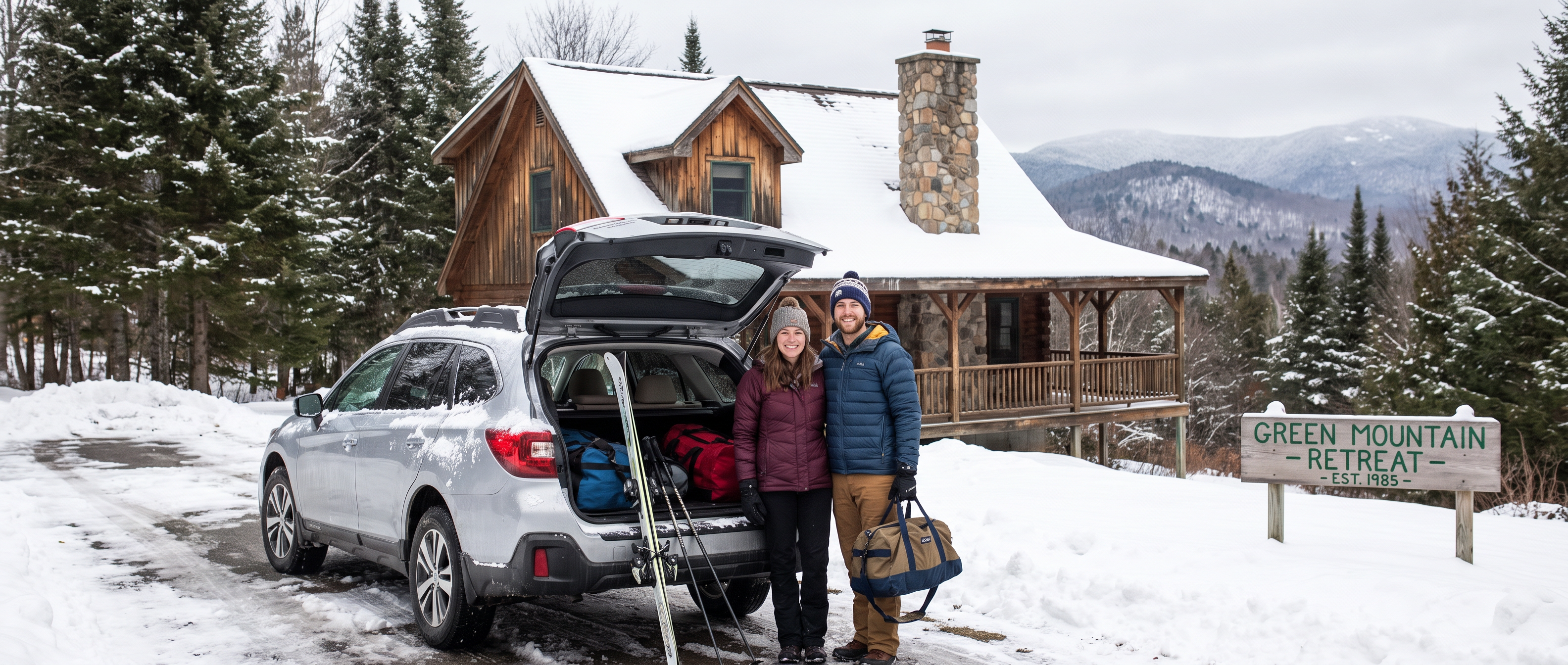
The second stay is where the margin lives.
What a channel fee costs in 2026
The marketplaces changed their pricing in the past year, and owners should know the current numbers (as of November 2026):
Airbnb
What it costs: Host-only service fee of 15.5% of the booking subtotal for most hosts (some pay 14% to 16%).
Notes: Replaced the old split of about 3% from the host and 14% or more from the guest. Professionally managed listings connected through software moved to this model in October 2025.
Vrbo
What it costs: Flat 12% commission from October 29, 2026.
Notes: Previously 5% for managers connected through software and 8% for other hosts. Vrbo said guest-side fees would be reduced at the same time.
Direct (manager’s own booking site)
What it costs: Card processing only, typically around 3%.
Notes: No marketplace commission. The marketing that brought the guest (search, email, social) is a cost the manager carries, not a per-booking fee.
These are the platforms’ published figures as of this writing; both companies adjust fees and the details differ by host type, so treat them as the shape of the thing rather than a quote.
Here’s what that shape means on a real booking. Take a $2,500 reservation, which is an ordinary peak week in either of GetAway’s markets:
Airbnb at 15.5%: $387.50 channel fee, leaving $2,112.50 before management and cleaning.
Vrbo at 12%: $300.00 channel fee, leaving $2,200.00.
Direct at about 3%: $75.00 channel fee, leaving $2,425.00.
Illustrative example using published fee rates; your statement will differ. The point is the gap: more than $300 between the first row and the last on one booking.
The second stay is where the margin is
Now run the same guest across three stays. Say they found the home on Airbnb for a ski week, loved it, and booked the next two winters directly through the manager’s site after a seasonal email.
Year 1, Airbnb: $387.50 channel fee.
Year 2, direct: $75.00 channel fee.
Year 3, direct: $75.00 channel fee.
Total over three stays: $537.50.
If all three stays had come through Airbnb, the fees would total $1,162.50. The repeat path saves $625 on one guest over three years, and that’s before counting the second family they refer. Multiply by every guest who stays twice and the number stops being a rounding error.
There’s a second benefit that doesn’t show on the fee line. A repeat guest already knows the house. They arrive with the right expectations, ask fewer questions, treat the home like they’ll be back (because they will), and leave the kind of review that brings the next first-timer. Repeat guests are cheaper to acquire and cheaper to host.
The Loyalty Loop in practice
GetAway runs past-guest marketing as a cycle, which our owner site calls the Loyalty Loop: deliver the stay and support it, capture the review, re-engage the guest directly, and earn the rebooking and the referral. Each step is specific work, not a slogan.
Deliver and support. The stay has to be worth repeating. Guest Services is available 24/7, and the local teams in Killington and York handle the things that turn a five-star stay into a four-star one when nobody answers the phone.
Capture the review. A review request timed to the guest’s departure lifts the listing’s ranking on every channel it appears on. Ranking is exposure; exposure is the next first-time guest. Our post on listing quality and reviews covers why a steady stream of recent reviews matters more than a handful of old ones.
Re-engage directly. Past guests are marketed to each season through email: a ski-season note in the fall, a summer-on-the-coast note in late winter. The email goes to a guest who already knows the house and links to the manager’s own booking site, not to a marketplace. Every direct channel GetAway runs (search, paid search, email, social) sends travelers to that site.
Rebook and refer. Repeat stays and referrals compound. A guest who comes back three years running and brings a friend has done the marketing for you.
Why a 4.9 rating is a repeat-guest strategy
GetAway homes average a 4.9 guest rating. That number does two jobs. On the marketplaces it sorts the listing higher and converts more first-time lookers. Off the marketplaces it’s the reason a guest opens the seasonal email instead of deleting it. Nobody rebooks a house they rated three stars.
So the operational side of this (fast responses, clean turnovers, honest listings, the right amenities) isn’t separate from the revenue side. It’s the input. Our dynamic pricing and booking channels posts cover how a home gets found and priced; this is how it gets re-booked.
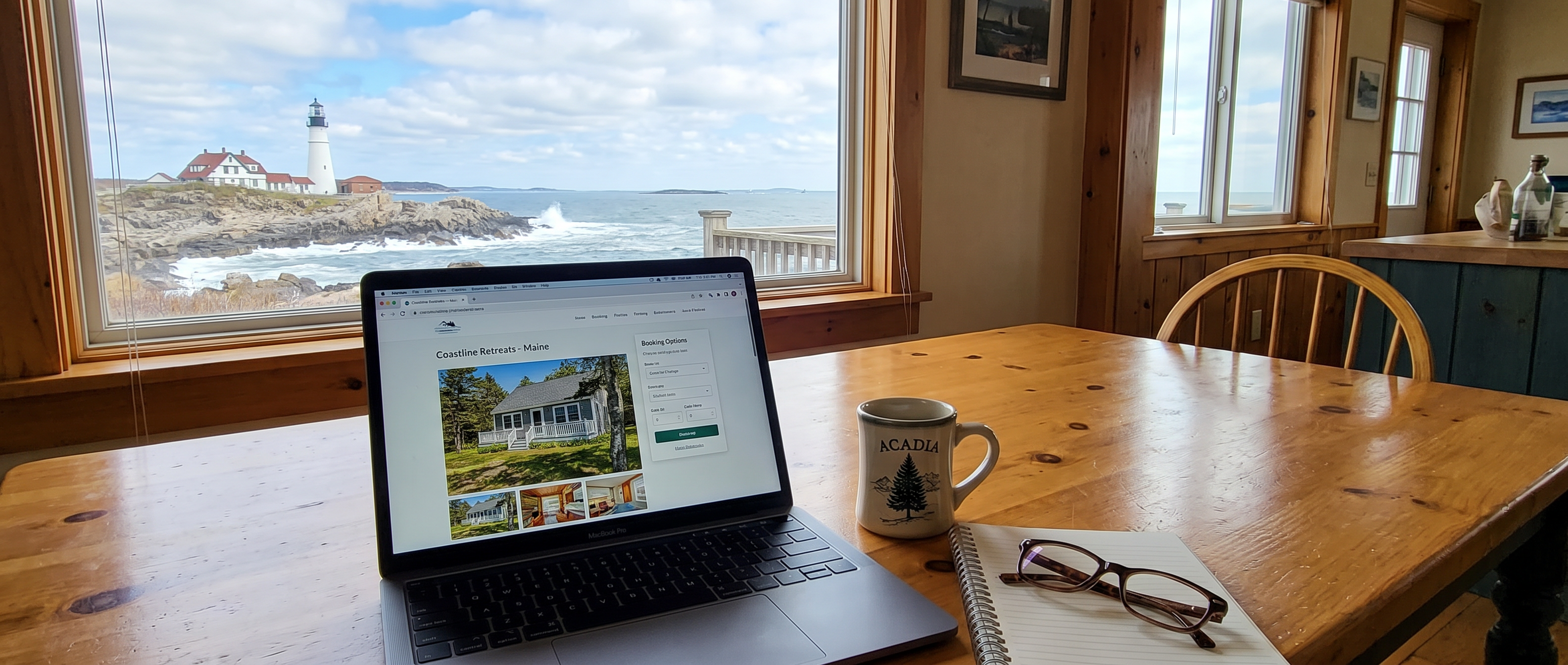
Direct bookings skip the marketplace fee entirely.
What stays with the owner, and what the manager does
Owners sometimes ask whether they can market to past guests themselves. In a managed program, the practical answer is that the manager already is, and does it with tools most individual owners don’t have: a guest database across the whole portfolio, email campaigns built and sent each season, a booking site with search and paid traffic behind it, and the review and messaging workflow that fills the database in the first place.
What you keep is visibility. Every booking, direct or marketplace, lands on the same calendar and the same monthly statement in the owner portal, so you can see where your guests are coming from and watch the direct share grow over time. And the asset this builds, a list of people who love your house, grows with the home year after year.
The booking you don’t pay for twice
A marketplace earns its fee by introducing a stranger to your house. A manager earns its keep by making sure that stranger comes back without the marketplace in the middle. Fewer fees on the second and third stays, guests who already know the home, and a review stream that keeps the first-timers coming: that’s the loop, and it runs on a stay worth repeating.
If you’d like to see what your Vermont or Maine home could earn with both paths working, get a free rental projection from GetAway’s revenue team.
Frequently asked questions
Does a direct booking mean a lower rate for the guest?
Not necessarily. Many guests book direct for the same nightly rate and simply avoid the marketplace’s guest-side fees, which is why the direct offer is attractive without a discount. Where a re-booking offer is used, it’s typically a modest incentive on a shoulder-season stay, not a cut to peak-week pricing.
How big is the fee difference, really?
On a $2,500 booking, Airbnb’s 15.5% host-only fee is $387.50, Vrbo’s 12% commission is $300, and a direct booking costs roughly $75 in card processing. Over a guest who stays three times, the difference between all-marketplace and marketplace-then-direct is about $625, using the rates published as of November 2026.
Do I lose anything by relying less on Airbnb and Vrbo?
No. The marketplaces stay on. GetAway lists homes on more than 30 channels because that’s where first-time guests are searching. Direct booking adds a second, cheaper path for the guests who already know the house; it doesn’t replace the first one.
Who owns the guest list?
In a managed program the guest relationship, the database, and the campaigns are run by the manager on the owner’s behalf, across all the homes in the program. You see the results on your calendar and statement. If you have past guests of your own from before joining, tell your onboarding specialist so they can be folded in.
Can a repeat guest book directly for an owner-blocked week?
No. Owner blocks placed through the portal show as unavailable everywhere the home is distributed, including the direct site, so a returning guest can’t book over a week you’ve reserved for yourself.
How long does it take for repeat bookings to matter?
Usually two seasons. The first season fills the database; the second is when the seasonal emails go to people who have actually stayed. Owners who join before a peak season see the effect sooner, because the first wave of guests is larger.