

Listing Quality and Reviews: Photography, Titles, Amenity Tagging and How Reviews Compound
Listing Quality and Reviews: Photography, Titles, Amenity Tagging and How Reviews Compound
Two nearly identical four-bedroom homes sit a quarter mile apart in Killington. Same hot tub, same distance to the lifts, same nightly rate. One books 40 more nights a year than the other. The difference is not the house. It is the listing: the first photo, the first line of the title, whether "hot tub" is tagged as an amenity or only mentioned in paragraph four, and how many guests have said in writing that the place was spotless.
This post is about the part of vacation rental revenue that happens before a guest ever arrives. Listing quality earns the click, the click earns the booking, the booking earns the review, and the review earns the next click at a higher price. Here is how each piece works, and a checklist you can run on your own listing this afternoon.
The Pro Answer
Booking platforms rank listings on quality (ratings and reviews), popularity (clicks, saves and bookings) and price. Professional photos and a title that leads with what makes the home different earn the click; complete, accurate amenity tagging keeps the home visible in filtered searches; and reviews compound, because rating and review volume raise ranking, ranking raises bookings, and a strong rating supports a higher rate. Run a listing audit twice a year, respond to reviews thoughtfully, and treat every stay as a review request.
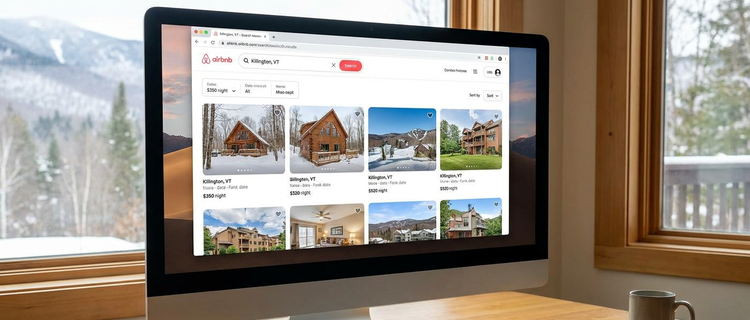
Photography: the shot list that converts
Guests scroll. The first photo decides whether they stop, the first five decide whether they read, and the rest decide whether they book. Every home we manage is photographed professionally because the numbers do not support any other approach: one platform now requires a minimum of six unique photos just to stay listed and recommends high-resolution images at 4K size, and the other lists photo quality among the factors in how search results are ordered. Phone photos on a cloudy day cost an owner bookings all year, every year.
The shot list for a Killington or Maine home
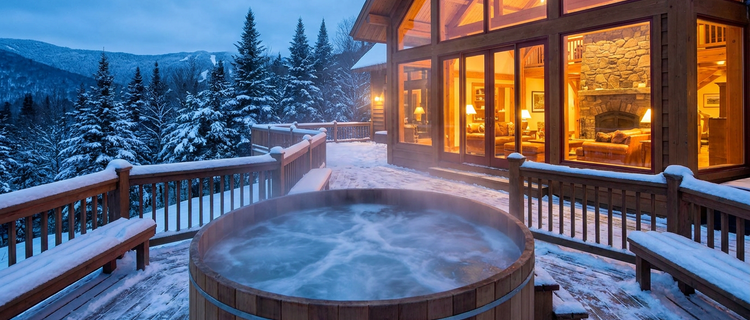
The hot tub at dusk (Killington) or the deck at golden hour with the water behind it (Maine). This is the first photo. Steam, warm interior light in the windows, snow or sea in frame.
The view. From the window, the deck or the yard, on a clear day. If the home has a view, it goes second.
The living room with the fire lit, shot wide from a corner, lamps on, throw on the sofa.
The kitchen, clean and styled: a bowl of fruit, a coffee setup, the island clear. Groups and families book kitchens.
The bunk room. Families are looking for exactly this photo. Make the beds, add a stuffed animal, show all the bunks.
The primary bedroom, with the bed made hotel-tight and both nightstands visible.
Every other bedroom and bathroom. Guests count. Missing rooms read as hidden problems.
The exterior in season: the chalet under fresh snow, the cottage with the beach roses in bloom. Ideally both, swapped in as the season turns.
Proximity proof: the ski trail from the deck, the path to the beach, the view of the lift or the lighthouse.
The details guests remember: the game shelf, the mudroom with boot dryers, the outdoor shower, the fire pit with chairs set out.
Two rules: shoot with lights on and in the best natural light of the day, and photograph the home the way it will be when the guest arrives, which is to say staged, spotless and stocked. Professional photography and optimized listings are part of the standard revenue program for every GetAway home.
Titles and descriptions: lead with the differentiator
The most common listing title in Killington is some version of "4BR 2BA House Near Killington." It is accurate, it is what the search filters already told the guest, and it gives them no reason to click yours instead of the one above it.
A title should lead with the one thing a guest cannot get next door. Compare:
Listing titles that lead with the bed count vs. the differentiator
Leads with bed count: 4BR 2BA House in Killington. Leads with the differentiator: Ski-In/Ski-Out Chalet, Private Hot Tub, 250 ft to the Trail
Leads with bed count: 3 Bedroom Cottage in Wells Maine. Leads with the differentiator: Walk to Wells Beach, Screened Porch, Dogs Welcome
Leads with bed count: Condo Near Lifts, Sleeps 6. Leads with the differentiator: Steps From Snowshed, Fireplace, Shuttle at the Door
Leads with bed count: Large Home Sleeps 11. Leads with the differentiator: Game Room, Bunk Room and Sauna: Built for the Whole Crew
The same logic runs through the description. The first two sentences do most of the work, because that is all a guest reads on a phone before deciding to scroll or leave. Name the differentiator, name the location precisely (which base lodge, which beach, how many minutes on foot), and give one specific image of what the stay feels like. Then get practical: layout by floor, beds by room, parking count, the things that surprise people. Honesty about a bunk room, a steep driveway or a flight of stairs does not cost bookings; it prevents the two-star review from the guest who expected something else.
Amenity tagging: the filters guests actually use

Here is the quiet way a good home disappears. A guest searching Killington for Presidents' Week filters for "hot tub." Your home has a beautiful one, described lovingly in paragraph four. But the hot tub box in the amenity section was never checked, so your listing is not in the results. Not ranked low. Absent. Filtered search does not read descriptions; it reads tags.
The filters that matter most for our markets, all of which exist on the largest platforms:
Hot tub: the single most important tag in Killington and a strong one on the Maine coast.
Ski-in/ski-out: only if it is true, and it is worth its own sentence in the title if it is.
Pets allowed: dog owners filter first and book loyally.
Beach access and waterfront in Maine; lake access where it applies in Vermont.
EV charger: Vermont passed 20,000 registered EVs in 2026, the largest platform reported searches filtered for a charger growing by more than 80 percent in a single year, and listings with a charger booked measurably more nights.
Fire pit, sauna, pool (community pools count), washer and dryer, free parking, wifi (with the speed in the description) and workspace.
Family features: crib, high chair, stair gates, board games. Each is a checkbox and each is a filter for someone.
Audit the tags against the house twice a year, and never tag something the home does not have; a missing "sauna" that a guest filtered for is the fastest route to a bad review and a refund.
How reviews compound
The platforms are unusually open about this. The largest one says its search results are shaped by quality (listings with better ratings and reviews tend to rank higher), popularity (how often a listing is saved, messaged and booked) and price relative to comparable homes. The other publishes per-listing metrics and ties its top host status to a 9.2-plus rating, 99 percent acceptance and zero cancellations, and rewards it with higher search placement.
Two thresholds matter early. A star rating appears in search only after a listing has three reviews, so a new listing's first three stays are the most important of its life. And the largest platform's "Guest Favorites" badge, which meaningfully raises visibility, goes to homes averaging above 4.9 stars with at least five reviews in the past four years and very low rates of cancellations and quality issues, re-evaluated daily. Superhost status (4.8-plus, 90 percent response within 24 hours, under 1 percent cancellations) is assessed every quarter.

Put the pieces together and you get a loop that runs in both directions:
Great photos and an honest, specific listing earn the click and the booking.
A clean, accurate stay earns a five-star review.
Rating and review volume raise the listing's ranking and can earn a badge.
Higher ranking earns more clicks and bookings, and a strong rating lets the home hold a higher nightly rate than an unrated comparable.
More bookings produce more reviews, and the loop tightens.
Run the loop backward and it is just as powerful: a few three-star reviews about cleanliness drop ranking, fewer bookings mean fewer chances to recover, and the home ends up discounting to compete. This is why the stay itself is the marketing. Our property care program separates cleaning from inspection precisely so that the review a guest writes matches the listing they booked.
The review-request process
Every guest is asked for a review, every time, in a personal message sent at checkout while the trip is fresh. The platforms give both sides a 14-day window after checkout and publish reviews once both are submitted or the window closes, so the ask lands on day one, not day ten. Guests who mention a problem during the stay get it fixed first and are asked later. Reviews are read weekly for patterns (the same comment twice is a maintenance ticket), and the review counts, ratings and comments for every home appear in the owner portal alongside bookings and statements, which our owner reporting page describes in detail.
Responding to reviews: tone, timing and the bad one
Public responses are visible on the listing page next to the review, so a response is written for the next guest as much as for the last one. The research on management responses in hospitality is clear on two points: hotels that began responding to reviews saw their average ratings rise and received more reviews, and yet responding to every single review shows diminishing returns and can read as canned. The practical rule is to respond personally to every negative or mixed review and to a meaningful share of the positive ones, in a voice that sounds like a person.
The tone that helps
Positive review: thank them by name, mention one specific thing from their review, invite them back. Three sentences.
Mixed review: thank them, acknowledge the specific issue without excuses, say what changed, and stop. Four sentences.
Negative review with a factual issue: always respond. Apologize for the experience, state plainly what was done (a repair, a new cleaner, a listing correction), and thank them for flagging it. Never argue, never explain why it was their fault, never write more than the review itself.
Negative review that is unfair: respond briefly and calmly with the facts a future guest would want, then let it go. Reviews that meet the platforms' guidelines cannot be removed, and a measured response next to an unreasonable review persuades the reader in your favor.
Responses at GetAway are written by the local team, within a few days, in that voice. It is one of the small, unglamorous jobs that keeps the loop above running the right way.
A listing audit checklist you can run yourself
Open your listing on your phone, the way a guest sees it, and check each of these:
First photo: Is it the hot tub at dusk, the view or the deck at golden hour? Would you stop scrolling?
Photo count and quality: At least 25 professional photos, every room represented, shot with the lights on and the beds made.
Seasonal exterior: Does the exterior photo match the season a guest is booking? Snow in a July listing is a missed opportunity.
Title: Does the first word describe a differentiator (ski-in, hot tub, walk to beach, dogs welcome) rather than a bed count?
First two sentences: Location precisely, differentiator named, one vivid image of the stay.
Layout honesty: Beds by room, bunk rooms and pull-outs disclosed, stairs and driveway described.
Amenity tags: Every real amenity checked (hot tub, pets, EV charger, fire pit, sauna, washer, parking, wifi, workspace, crib), nothing tagged that the home lacks.
Wifi speed and workspace: Stated in the description with a number.
Rating and badges: Above 4.8? At least three reviews so the rating shows? Eligible for the top-host badges? If not, what is the one issue holding it back?
Recent reviews: Read the last ten. Does any comment appear twice? That is a fix, not a coincidence.
Responses: Has every negative or mixed review in the past year received a calm, specific reply?
Price against comparables: Is the home priced within a reasonable band of similar, similarly rated listings, or is a weak listing being compensated for with a low rate?
If more than three items fail, the listing is costing the home bookings every week. That is fixable, and it is exactly the work our team does for owners as part of vacation rental management in both states. Guests tell us what they consistently value on our guest reviews page: cleanliness, pet-friendly homes and easy access to the mountain and the beach. Every one of those is a listing decision before it is a review.
Every booking starts with a scroll. Win it.
The house next door is not booking 40 more nights because it is a better house. It is booking them because its listing tells the truth beautifully: a first photo that stops the thumb, a title that says what makes the place different, every real amenity tagged, and a column of reviews that say "spotless" fifty times in a row. None of that is luck. Every piece of it is a decision an owner or a manager made, and every piece of it compounds.
That is the encouraging part. Listing quality is one of the few revenue levers that is entirely within your control and pays back every week of the year. Run the audit in this post on your phone tonight. Fix the first photo and the title this week. Check the tags against the house. Answer the reviews that need answering. Then let the loop do what it does: better listing, more clicks, more bookings, more five-star reviews, higher ranking, stronger rates.
At GetAway, professional photography, listing optimization, review management and honest reporting are part of the standard service for every home in Vermont and Maine, because we have watched this loop run in both directions and we know which one pays. If your listing is leaving bookings on the table, a free rental projection is the fastest way to see what it could be earning instead.
Get a listing that earns the click, the booking and the review
Professional photography, optimized titles and tags, review management and honest reporting are standard for every GetAway home. Start with a free rental projection for your Vermont or Maine property.
Frequently asked questions
Do professional photos really increase vacation rental bookings?
Yes. Photo quality is an explicit factor in how the largest platform orders search results, one platform requires a minimum of six unique photos and recommends 4K resolution, and the first photo determines whether a guest clicks at all. Professional, staged, well-lit photos are the highest-return investment a listing can make, which is why GetAway includes them for every home.
What should the first photo of a Killington listing be?
The hot tub at dusk, with steam rising and warm light in the windows behind it, if the home has one. Otherwise the view or the living room with the fire lit. For a Maine home, the deck or porch at golden hour with the water in frame. Lead with the thing a guest cannot get next door.
How do missing amenity tags hurt a listing?
Filtered searches only return listings with the matching tag checked, so a home with a hot tub but no "hot tub" tag is absent from the most common Killington search, not just ranked lower. The same applies to pets, EV charger, ski-in/ski-out, beach access and family amenities. Audit the tags against the house twice a year.
How many reviews does a listing need before its rating shows?
Three on the largest platform, which makes a new listing's first three stays the most important of its life. Top-host badges require more: the "Guest Favorites" badge needs at least five reviews in four years with an average above 4.9, and Superhost requires a 4.8 rating, 90 percent response within 24 hours and under 1 percent cancellations.
Should I respond to every review?
Respond to every negative or mixed review and to a good share of positive ones, personally and briefly. Research on hospitality reviews found that responding lifts ratings and review volume, but that answering every review shows diminishing returns and can feel canned. Never argue with a bad review; state what changed and stop.
Can a bad review be removed?
Only if it violates the platform's content guidelines. Reviews that meet the guidelines stay. The right move is a calm, specific public response that gives the next guest the facts, plus fixing whatever the review pointed to so it does not appear twice. Consistent five-star stays bury an outlier quickly.