

The Bunk Room Math: What One More Sleeping Spot Is Worth
The Bunk Room Math: What One More Sleeping Spot Is Worth
A guest planning a ski week for two families doesn’t search for "three bedrooms." They type in the number of people, and every home that can’t sleep that many disappears before they ever see a photo. That’s why two homes with the same three bedrooms can live in different markets: one sleeps six and competes with every three-bedroom condo on the mountain, the other sleeps eight and shows up for the two-family trip, the reunion, and the group of friends who would otherwise have needed a four-bedroom house.
Adding a sleeping spot is one of the few renovations an owner can make that changes which searches a home appears in. It also runs into real limits: fire safety, septic capacity, association rules, and the simple fact that eight people sharing one bathroom will say so in the review. This post walks through both sides.
The Quick Answer
Marketplaces filter by guest count first, so the "sleeps" number decides which searches a home appears in and which homes it’s priced against. Moving from sleeps 6 to sleeps 8 opens the two-family and friends-group market that drives peak-week demand in Killington and on the Maine coast. The right way to add capacity is a real sleeping space (a bunk room, a finished loft, a quality sleeper sofa in a room with a door) that stays inside the limits the house already has: an egress window for any room sold as a bedroom, Vermont’s fire-safety tiers that step up above eight guests, a septic system designed for the home’s bedroom count in both states, and whatever the condo association or town allows. Add spots up to those limits, state them honestly, and let the manager price the home for the bigger group.
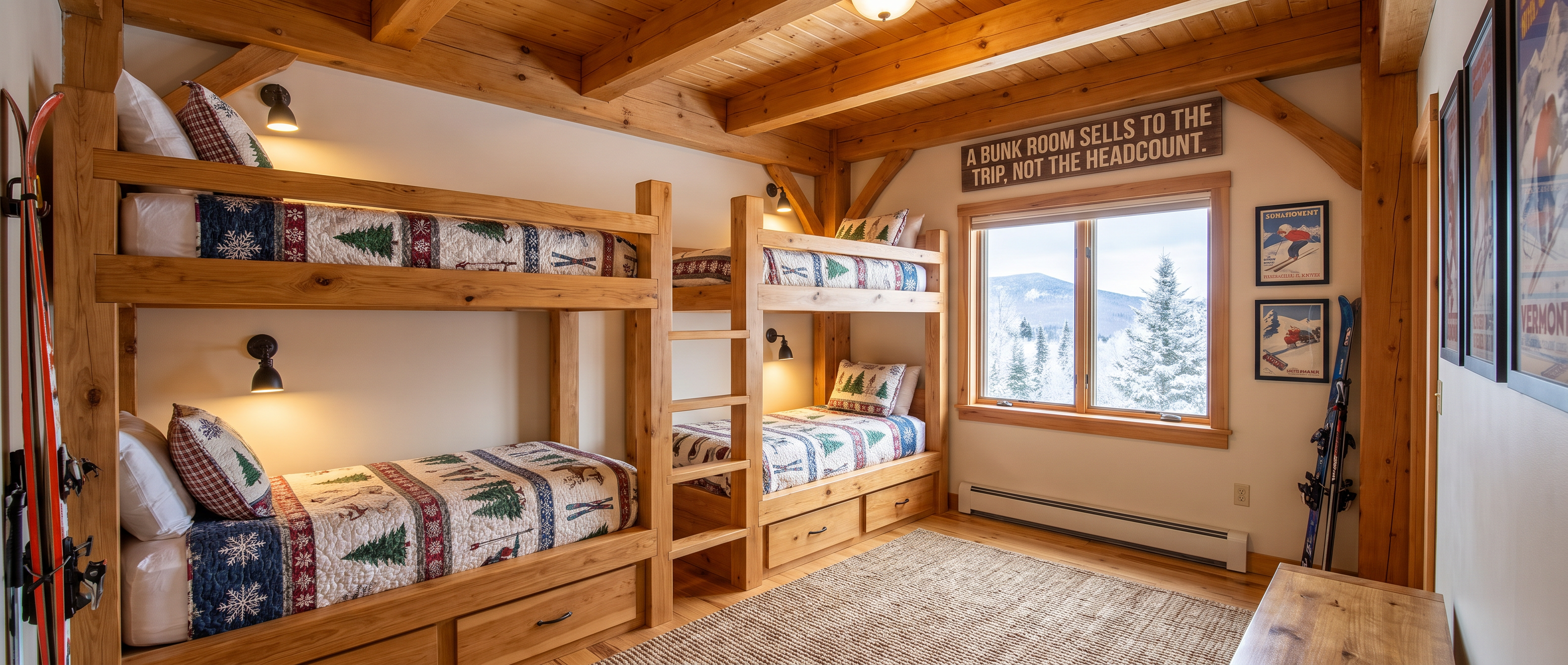
A bunk room sells to the trip, not the headcount.
How guests search: guest count first
On Airbnb and Vrbo, the search starts with where, when, and how many. The guest-count filter is a hard filter: a home whose capacity is below the number entered isn’t shown. AirDNA makes the same point about minimum-stay filters, and it applies equally here: a filtered-out listing produces no inquiry, so you never find out how many groups searched for your dates and couldn’t book because the house said six and they needed eight.
That’s the first half of the math. The second half is pricing. Homes are compared against the homes that show up in the same search. A three-bedroom that sleeps eight is compared, by the guest and by the pricing data, with other homes that sleep eight, which includes four-bedroom houses. It won’t command a four-bedroom rate if it has one bathroom, but it will be seen by the group that was going to pay for four bedrooms.
GetAway listings carry a sleeps count next to the bedroom count for exactly this reason, and the two numbers don’t always move together. A four-bedroom with one bath might sleep eight; a three-bedroom with a bunk room and two baths might sleep eight just as well.
Sleeps 6 versus sleeps 8 in Killington and on the coast
Look at who books peak weeks in GetAway’s markets:
Killington and Okemo: Two-family ski trips, friends’ weekends, and reunion groups. Our guest guides to renting a house in Ludlow for six to eight and planning a Killington ski trip for ten or more exist because those are the searches.
York, Ogunquit, and Wells: Multigenerational beach weeks, where grandparents, two adult kids, and the grandchildren want one house. Our three-bedroom York guide is written for a group that is almost always larger than six.
A home that sleeps six fits one family. A home that sleeps eight fits the trip. That is why the step from six to eight matters more than the step from eight to ten; it crosses the line between "a family" and "a group," and groups book the peak weeks.
The limits: egress, occupant load, septic, and the association
This is where honest capacity gets separated from a listing that says "sleeps 14" above a three-bedroom cottage. The National Fire Protection Association’s journal has pointed to exactly that kind of Maine listing as an example of why egress is the most ignored safety issue in short-term rentals. The limits below are the ones to check before building anything.
Egress. In Vermont, the Division of Fire Safety’s short-term rental guidance requires every sleeping room to have a primary and a secondary means of escape, and a window that meets rescue and ventilation requirements can serve as the secondary route. The commonly cited standard is a clear opening of at least 5.7 square feet with a sill no higher than 44 inches. A basement den or interior office without that window is not a bedroom and shouldn’t be marketed as one, in either state. Maine’s building code applies the same principle.
Alarms. Vermont requires photoelectric smoke alarms inside each sleeping room, in the immediate vicinity of sleeping rooms, and on every level, plus carbon monoxide alarms. Every new sleeping space needs its own alarm, which is a small cost and a non-negotiable one.
Occupant load in Vermont. The Division of Fire Safety has told the Legislature that the higher the occupant load, the more safety considerations apply: eight guests or fewer is the least restrictive tier, and 17 or more is treated as hotel or motel occupancy. A Vermont town report summarizing a Division presentation noted that rentals with more than eight occupants must meet additional requirements, with a change-of-use permit for nine to sixteen occupants and a commercial fire alarm system above nine. If you’re thinking about advertising a Killington or Okemo home above eight, talk to the Division first. Rules and interpretations change; the eight-guest line is the one to know.
Septic. In Maine, the Subsurface Wastewater Disposal Rules set a home’s design flow by bedroom count: 180 gallons a day for two bedrooms or fewer, 270 for three, 360 for four, 450 for five, and 90 more for each additional bedroom, with septic tank size scaled the same way. A system permitted for three bedrooms was designed for three bedrooms of use. Adding a fourth bedroom’s worth of guests to it is a plumbing question before it’s a marketing one, and a new bedroom generally requires an evaluation and permit. Vermont’s wastewater permits are written around bedroom count in the same way. Sleeping spaces that aren’t bedrooms (a sleeper sofa, a loft) don’t change the permit, but they do change the load, so a four-person bump on a marginal system is worth a conversation with your septic designer.
Association and town rules. Killington condo associations, the Quechee Lakes association, and Maine towns can each cap occupancy or require registration and inspection. Ogunquit inspects weekly rentals annually. Check before you build, not after.
Bunk room, sleeper sofa, or loft
Bunk room (two sets of bunks in an existing bedroom or a converted room)
What it adds: Two to four sleeping spots in a space kids and teens prefer anyway.
Counts as a bedroom? Only if the room has a proper egress window and a door.
Cost tier: Moderate: beds, mattresses, lighting, alarm.
Limits to check first: Egress, alarms, occupant load, septic design flow if it’s a new bedroom.
Quality sleeper sofa in a den or family room with a door
What it adds: Two spots for adults who’ll tolerate it for a weekend, not a week.
Counts as a bedroom? No.
Cost tier: Low.
Limits to check first: Comfort (cheap sleepers earn bad reviews), alarms if it’s a routine sleeping space.
Finished loft or bonus room
What it adds: Two to four spots, often the most photogenic space in a ski house.
Counts as a bedroom? Usually not, unless it has egress and meets ceiling-height rules.
Cost tier: Moderate to high.
Limits to check first: Egress, guards and railings, ceiling height, occupant load.
Murphy bed or daybed in an office
What it adds: Two spots that disappear during the day, good for remote-work guests.
Counts as a bedroom? No.
Cost tier: Low to moderate.
Limits to check first: Alarms; honesty about who it suits.
Converting a basement space into a bedroom
What it adds: Two spots and a new bedroom.
Counts as a bedroom? Only with an egress window or door and code-compliant finish.
Cost tier: High (egress window installation is the expensive part).
Limits to check first: Egress, septic (it’s a new bedroom), permits.
Two rules for all of them. First, the bathroom ratio moves with the sleeps count. Eight guests on one bath is a complaint waiting to be written; two baths for eight is the floor. Second, say exactly what the space is. A listing that calls a sleeper sofa a bedroom gets the booking once and the review forever. GetAway’s listing standard is complete amenity data and honest descriptions, and the listing quality post explains why that policy earns more over time than the optimistic version.
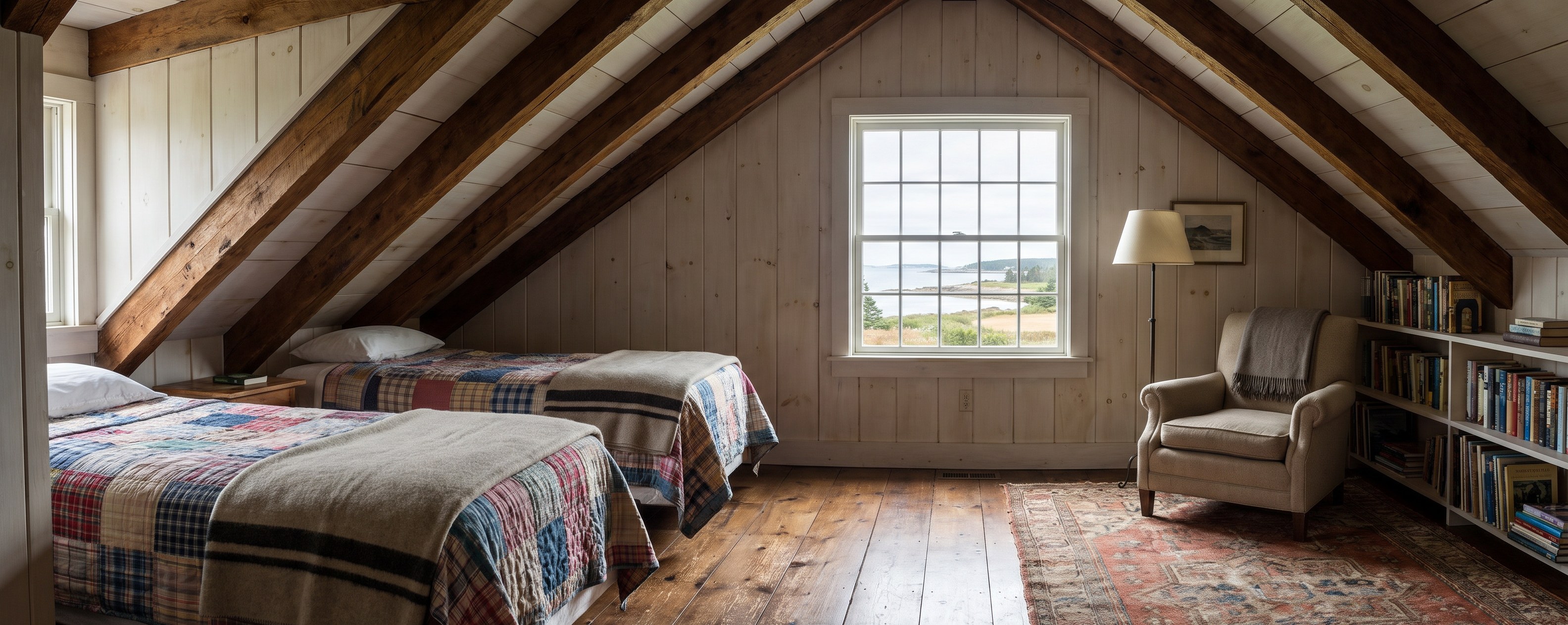
A loft with a window is a sleeping space. Without one, it’s storage.
What it costs and what it adds
The cost side is mostly furniture and alarms for a bunk room in an existing bedroom, and construction for anything that needs an egress window. The return comes in three forms:
Search exposure. The home appears for groups it was invisible to before. This is the largest and least visible effect, because you never see the searches you were missing.
Rate band. A home that sleeps eight is priced against the eight-guest market in peak weeks. The lift depends on the home and the market; a revenue manager building a projection can show what comparable homes at each capacity earn in your area.
Length of stay. Groups book longer. A two-family ski week is seven nights; the single family that fit in the six-person version often booked a weekend.
Against that, more guests mean more wear, more laundry, and sometimes a higher cleaning cost per turnover, all of which belong in the projection. Our property care program handles inspections and the safety items (alarms, egress checks, railing and guard condition) as part of onboarding, which is the right time to decide whether the den becomes a bunk room.
Add the spots the house already has room for
The best capacity to add is the capacity the house was built to hold and never advertised: the den with a window and a door, the loft that’s been storage, the kids’ room that could take bunks. Those spots move a home from "a family" to "the trip" without breaking a safety rule or a septic permit. Everything beyond that is a renovation decision, and it should be made with the limits above in front of you and a projection of what the bigger group is worth.
Get a free rental projection and ask GetAway’s revenue team what your home would earn at its next sleeps tier.
Frequently asked questions
Does adding a sleeper sofa really change my bookings?
It changes which searches the home appears in, which is the part owners can’t see. A home that sleeps six is filtered out of every search for seven or eight guests. Whether the extra exposure turns into bookings depends on whether the home actually works for eight: enough bathrooms, enough seating, enough parking. A sleeper sofa alone, in a house with one bath, usually isn’t enough.
Can I count a room without a window as a bedroom?
No. In Vermont, every sleeping room needs a primary and a secondary means of escape, and a window meeting rescue requirements is the usual secondary route. Maine’s code works the same way. A windowless den can hold a daybed and be described honestly as a den; it can’t be marketed as a bedroom.
What’s the eight-guest line in Vermont?
The Division of Fire Safety treats eight guests or fewer as the least restrictive tier for short-term rentals, with more requirements as occupant load rises and hotel/motel treatment at 17 or more. Vermont town summaries of the Division’s guidance describe added requirements above eight, including a change-of-use permit for nine to sixteen occupants. Confirm the current requirements with the Division before advertising above eight.
Does my septic system limit how many guests I can host?
In practice, yes. Maine designs home septic systems by bedroom count (for example, 270 gallons a day for a three-bedroom home), and Vermont permits are written around bedrooms too. Adding a bedroom typically requires an evaluation and permit. Adding non-bedroom sleeping spots doesn’t change the permit, but it adds load, so ask your septic designer before planning for four more guests on a system that was built for six.
Is a bunk room better than a fourth bedroom?
For most Killington ski houses and Maine cottages, a bunk room is the better investment: kids and teens prefer it, it holds four in the footprint of one room, and it doesn’t trigger the septic and permit questions a new bedroom does, provided the room already has egress. A fourth bedroom is worth more to multigenerational groups who want doors and privacy, and it’s the only option that moves the bedroom count itself.
Will a higher sleeps count hurt my reviews?
Only if the house can’t support it. Guests judge a home against what it promised. A three-bedroom, two-bath home that sleeps eight in two real bedrooms and a real bunk room reviews well. The same home claiming ten with a sofa and an air mattress does not.